Ambrosia Sky developers talk second act, getting the co-dev "pH balance" right, and more

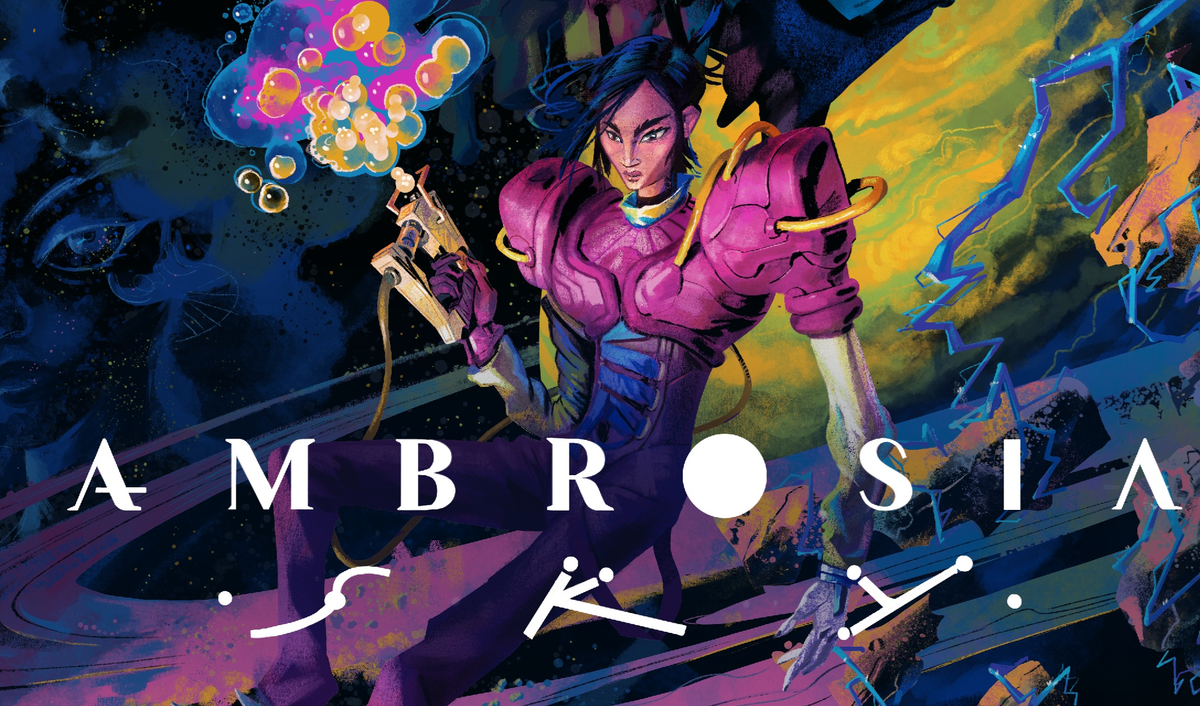
Hi there! I recently played through the second and final act of Soft Rains' Ambrosia Sky, which is something of a contemplative cross between Powerwash Simulator and an immersive sim.
Players take on the role of Dalia, a space witch of sorts called a Scarab, responsible for cleaning away alien fungus while slowly researching the secrets of life and death.
It's a slow, methodically-unfolding story that scratches a particular itch, and ahead of the launch, I was so curious about how the team put it together that I ended up chatting with some of the leads. We had a great conversation about the nature of co-development, what works, and what doesn't, so I'm sharing it here.
Hi! Before continuing reading, please subscribe so that you never miss a new post from me. Right now it's free, but if you want to help me out, I accept donations over on Ko-Fi, and you can always follow me on Bluesky if you have a tip for a story or just want to talk.
Laying the foundation through co-development
While Soft Rains ended up completing the second half of Ambrosia Sky on its own, the team partnered with an external developer to work on the first act, bringing in fellow Canadian studio Blackbird Interactive in order to assist with almost every facet of the game.
Soft Rains founder Joel Burgess and Blackbird Interactive president Rory McGuire first started talking about collaborating in 2024, and it quickly became apparent to both parties that Ambrosia Sky was a natural fit to leverage Blackbird Interactive's skills, especially with the latter's prior work on Hardspace: Shipbreaker.
"We're talking through the game and the creative space of it, and it's like 'Yeah, it's this game where you're doing this blue collar work and you're in space in first-person,' and the creative common ground between Shipbreaker and Ambrosia Sky kind of led to 'Oh yeah, right, obviously this group's gonna have the sensibilities,'" Burgess says.
Blackbird Interactive touched many different aspects of the game, even assisting with the writing where needed due to "bandwidth" challenges, but ultimately the bulk of the studio's support manifested in level design.
"We were roughly a quarter to a fifth of a team at any given time, for the last kind of seven-month push to get Act One in a great place," McGuire says. "The team was mostly in the creative space, so it was a lot of designers, artists, [with] specifically a big emphasis on levels and level content."
Game development is difficult at the best of times, and having two studios working together on a project at the creative level can excarberate that difficulty. I was curious about what initial worries the teams had as they began working together, and if there was ever any tug-of-war over various aspects.
"I think whenever you add people to a team, the dynamic changes. Hopefully, that's always for the positive," McGuire says. "So I think that was just the challenge: The inherent change to the pH balance of a team that comes from adding 20% more to that team."
"It was very important that the team — because it was mostly a creative-focused team — integrated in a way that was respectful. Like Joel was the visionary, his art director was directing the art, his tech director was directing the tech team. We didn't want to stomp on any of that, but we also wanted to put our best foot forward, and so we were just respectful in how we raised things," he adds, noting that the "soul" of the team's work always belonged to Soft Rains, not to Blackbird.
Burgess concurs with how well the teams mixed, adding that "If we had any difficulty, probably it was we were trying so hard to really integrate creatively and be accommodating of the space for the BBI folks to make a creative imprint on the game, that it probably took the first couple of weeks to communicate that the space was open and available and desired."
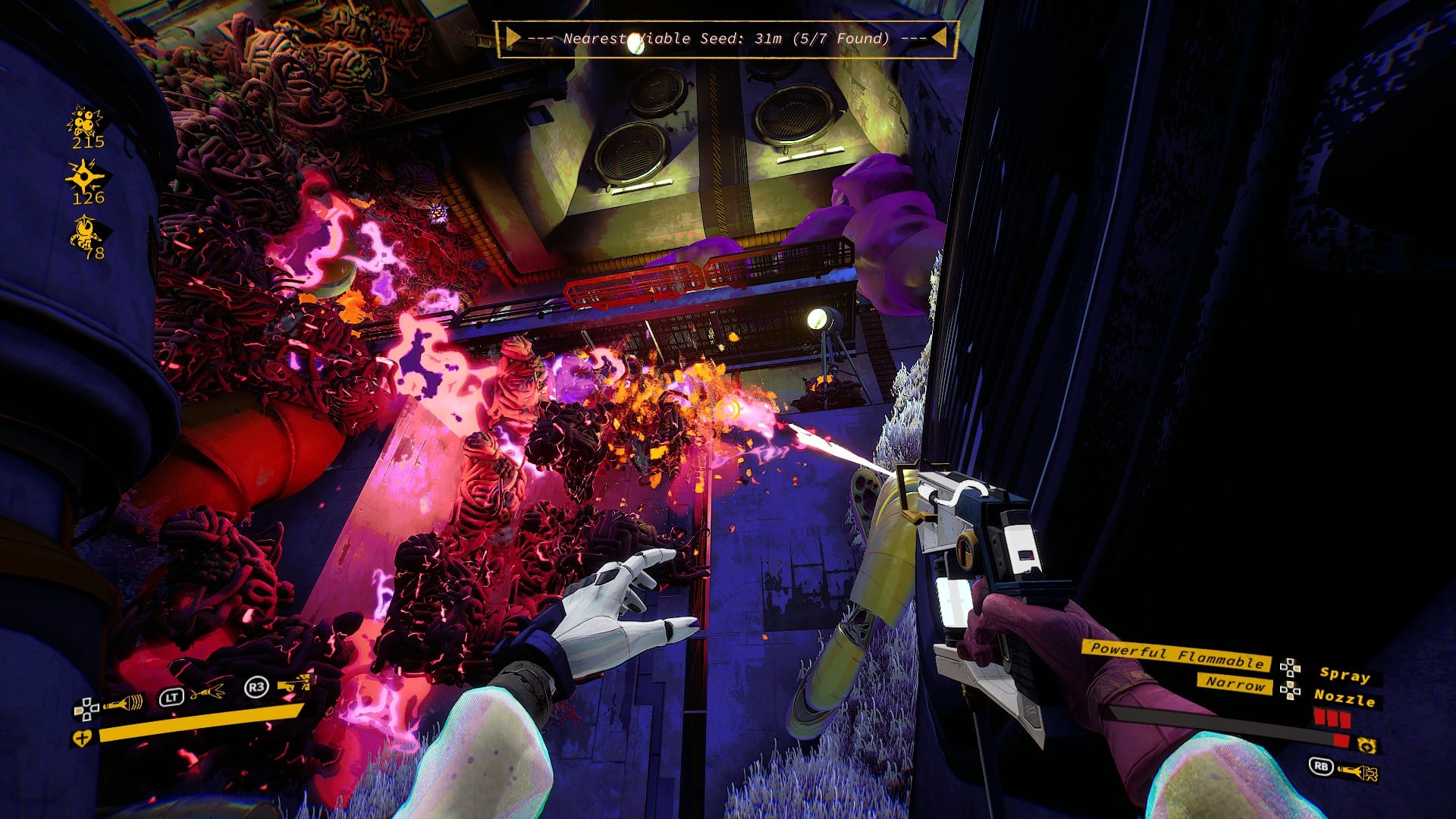
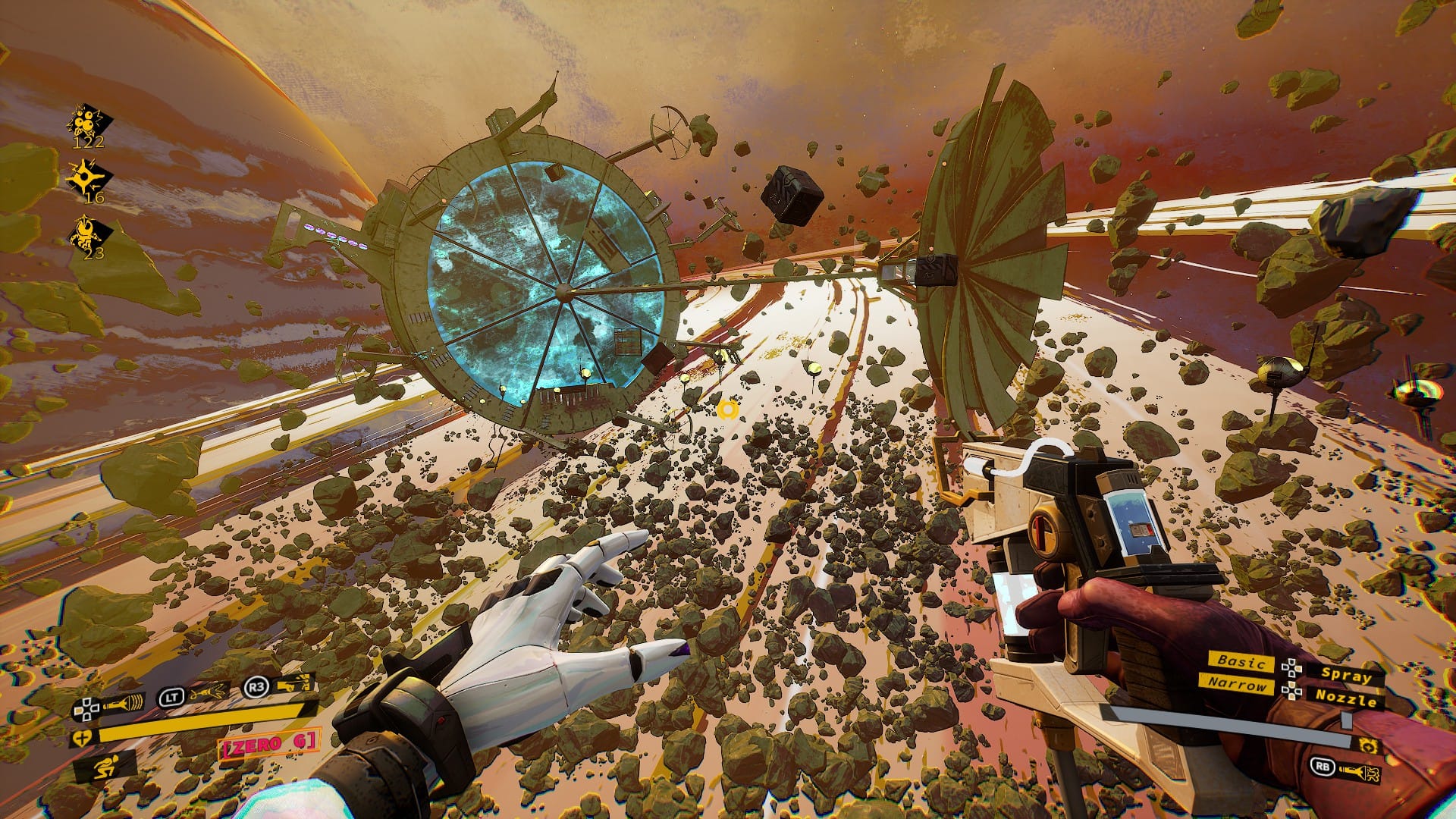
Burgess points to one of the largest missions in Act One as a clear example of collaboration bearing fruit. In this level, Dalia is tasked with cleaning the outside of an enormous spacecraft, moving around in zero-gravity all the while. It's one of my favorite levels, quite reminiscent of Arkane's Prey, and it came from letting Blackbird Interactive take the lead.
"It was basically the level that was like, 'Okay, somebody's going to take this level and run with it,' and it was a question of who, and we made the call to give a level designer from BBI ownership of this space, right?" Burgess explains, adding that because both teams were fairly small, providing feedback didn't have to go through numerous layers of production and management. This almost meant despite one team or the other taking the lead at points, both studios were always involved in the process.
"Whether it's a real or imagined fear, the fear with co-development is that you'll be able to tell where team A ends and team B begins," he says. "I don't think you get that [with Ambrosia Sky]. If you press somebody to say what parts of Ambrosia Sky were done by which team, I don't think you'd be able to work that out, and that is, I think, a positive and by design.
Soft Rains went on to handle the game's second act by itself — our conversation took place before I had the chance to actually play Ambrosia Sky: Act Two — and I was curious what the studio had learned, as well as how different the experience was in developing part of a game on its own.
Burgess likens the experience to constructing a house, and that having had help to set the foundation and build up the first floor, the team was now more capable of expanding the construction plans by itself.
"Act One established the game for us with like a really high level of clarity," he says. "I think the the Act One, Act Two thing has given us a lot of that benefit of like, 'Oh, we see what people are really responding to or really want,' and it's allowed us with looking forward to Act Two to be 'Hey, this thing that we were going to do, we should do a little bit more of, or a little bit less of.'"
"We have our narrative tools and systems, so we have a lot of the raw material to then go and build, so that has meant that we were able to go into Act Two as a smaller team" Burgess says, pointing to the "question marks" that hang over a project until it is released as no longer needing to be solved.
"Once we released Act One, thanks to everybody who worked on the team — Blackbird included, and everyone who was ever a full time or a contractor, or part timer on the project — everyone contributed towards this cohesive vision of what the game was, which then allowed us to be able to be a smaller team to be really precise about what Act Two is."
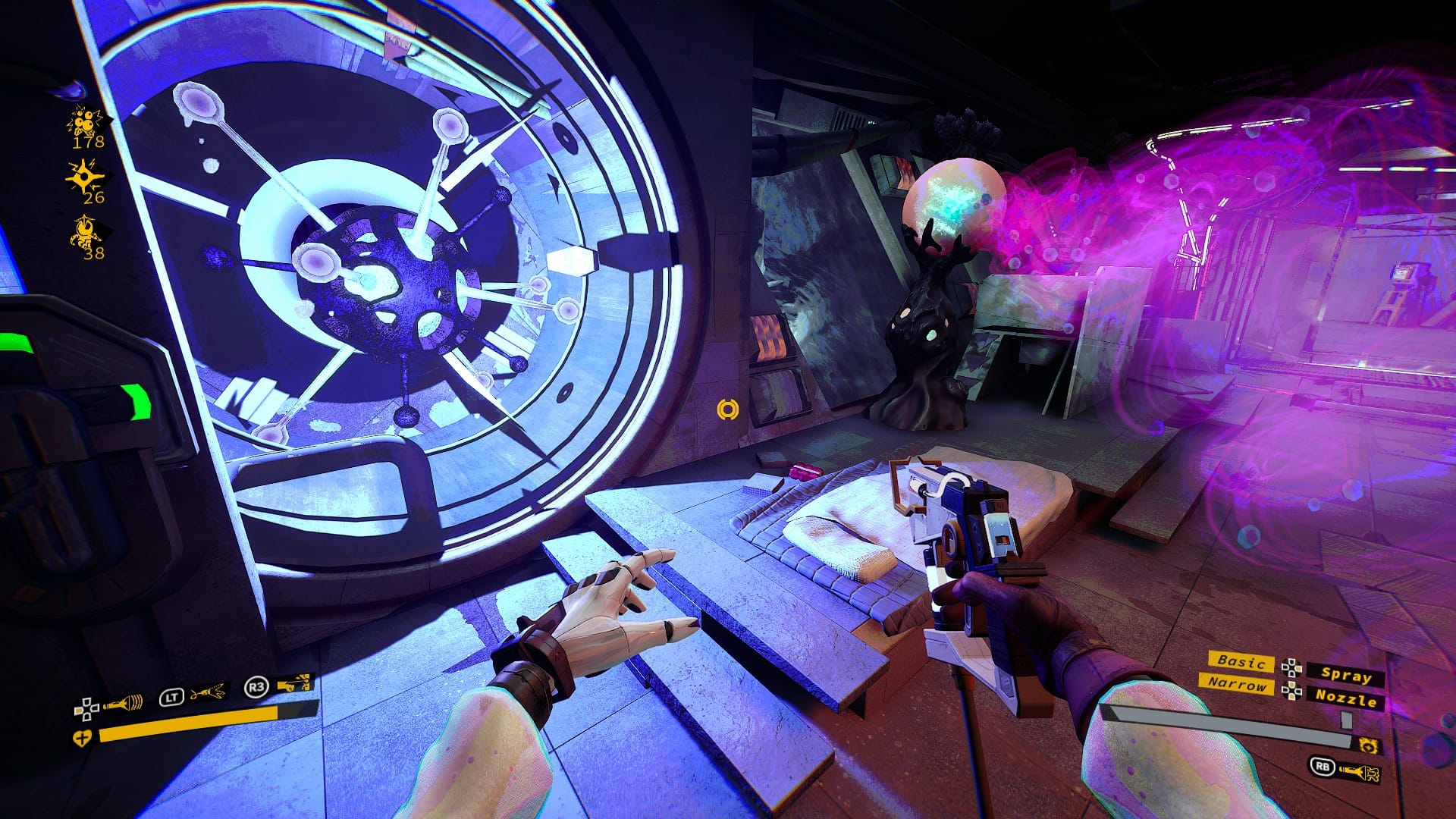
While Ambrosia Sky was initially announced as a three-act game, Soft Rains ended up shifting gears to conclude the story in Act Two, something that Burgess acknowledges there were multiple factors behind.
"Now, in anticipation of that release [of Act One], we had thought, 'Okay, well, there's a bunch of different scenarios that we follow up on the project,' and because this is what we had said publicly, the three-act release was the one we thought was Plan A." Burgess says.
"What we realized was 'Okay. The things that we want to do in the game mechanics and the story and the narrative...we can serve what people want from the project, and we can use the tools that we have really effectively by focusing on a second act that's going to conclude the story, rather than doing you know a three act structure or something else.'"
"I think it's one of the benefits of the way it's nice to be indie sometimes, right? We were able to kind of do that pivot even though we had said something differently beforehand, because at the end of the day this is the reason why Act Two is free, right?" he adds.
I asked what both teams had taken away from the experience, and how they thought about things differently, if at all.
"I think on the creative side, how a team thinks about creative and the words that they use to describe it, it's almost like language and how language informs thought, and thought then informs like your worldview," McGuire says. "It's similar getting to experience another team's creative processes and how the team thinks about creative and how they how they approach it."
"I'm always personally really fascinated with not just the final product of a game, but the evolution and how it got there, and the pivots that happened along the way creatively, of the thinking that informed it," he adds. "So I think we learned a lot both on the level design side and how to think about a product creatively and how to bring it to market and have it be fresh and unusual and something that people want."
Burgess points to how a successful partnership, like between Soft Rains and Blackbird, can go about assuaging some of the fears in game development.
"I think for Soft Rains and maybe for certain folks in the team individually, there was a little bit of 'Oh, we're going to do co-development with that team. What is that? Is it going to feel impersonal? Is it going to feel cold? Are we going to have operational fights about it?,'" he says. "And I think coming away from it being such a natural and such a positive experience now allows us — in what's frankly a climate where every studio, big or small, has to be elastic and open to different ways of working and getting the creative work done — to sort of take some of the fear, I guess, out of like what working with such an established and strong partner as BBI."
Closing out our conversation, I asked what advice they'd give to other studios that might be interested in co-development but had stayed away from it or perhaps had a bad experience in the past.
"My advice to both parties, both the client and contributing developer, would would be to be very clear about what the engagement should be, in terms of how ownership exists," McGuire says, pointing to how some co-development contracts simply want another studio acting "as a pair of hands" for the creative lead, while others want need more input.
"And it's surprisingly not always obvious which one it is for both parties. There's nothing worse than bringing somebody onto something and expecting them to own it and drive it, and they don't. Or you know, on the opposite side, trying to own something and drive something, and then being told, 'No, no, we've got this. You're a pair of hands.' So just be very clear and upfront, would be my advice."
For Burgess, it's similar, as he emphasizes communication and not being afraid of talking through the creative process early on.
"Certainly, a lesson I've learned over the course of this project — I think our collaboration with BBI is a good encapsulation of it — is realizing that the ideal working scenarios and creative scenarios with others are not always the same as yours." he says. "So projecting 'This is the way that I want to work, that must be the way that others want to work' is an anathema. It's a bad thing for what actually makes these collaborations work. And that is a lesson that I think I was learning through bruises and cuts and abrasions elsewhere in my career."
So, how is the game?
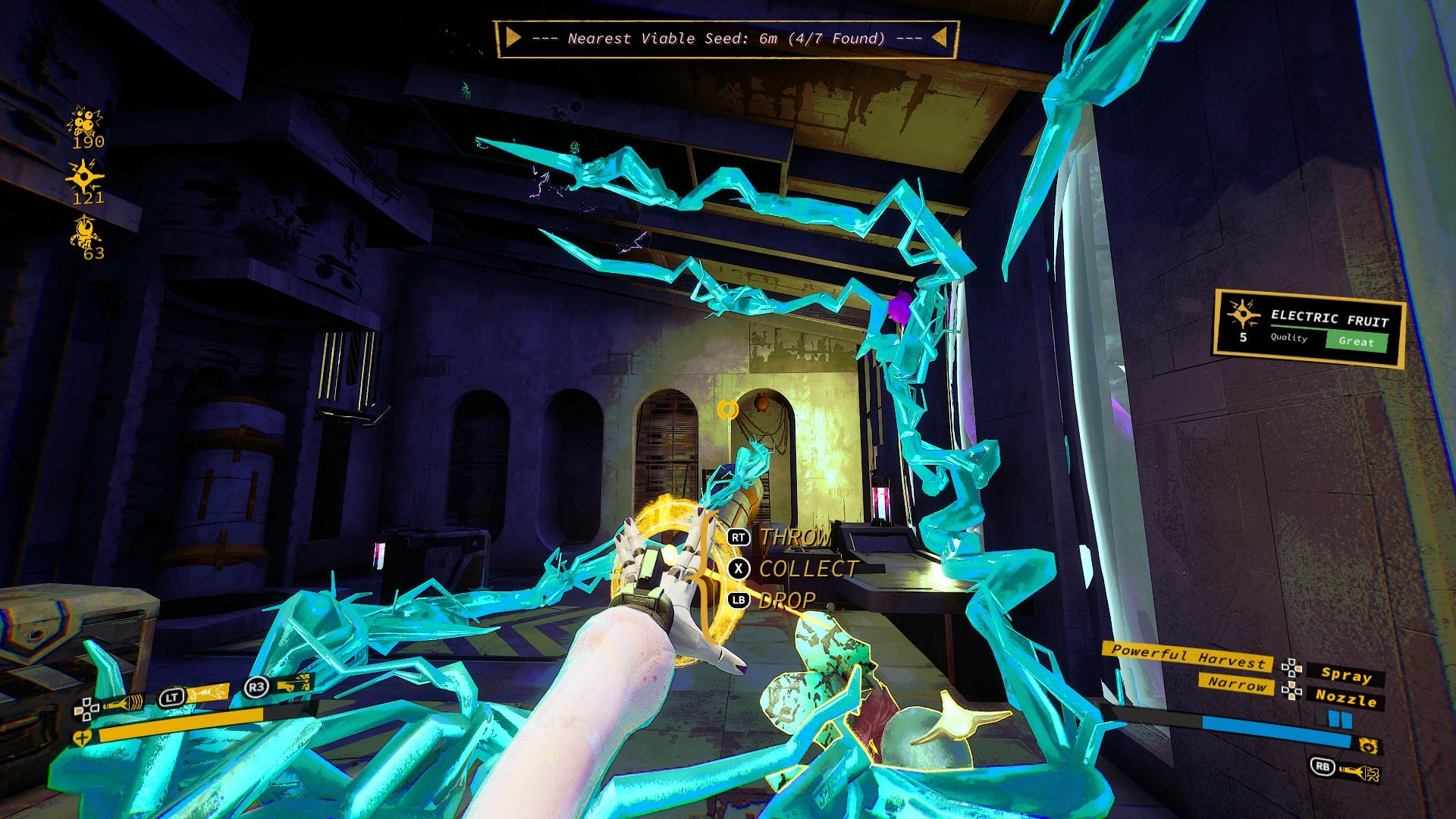
Ambrosia Sky is weird, in the most positive way possible. I felt that before, and it's only more true in the second act. One minute, you're trying not to be electrocuted by stubborn corrupted fungus. The next, Dalia is back to her sapphic pining and complicated feelings for her ex.
Like the first half, the second act took me just three or four hours to play through, but that will vary widely depending on your skill with puzzles and how many collectibles you're determined to find.
Despite all the clear sources of inspiration, there really isn't anything else entirely like Ambrosia Sky, and I've had a wonderful time playing through it. Whether or not Soft Rains opts to return to this world with a future project, this is a team I'll be keeping a close eye on in the future.
At the time I'm writing this, Ambrosia Sky is only $12 on Steam and the Epic Games Store. That won't last, as the price is going up to $25 in just a couple of days. Frankly, this now-completed story is an absolute steal at this price, and I highly recommend picking it up soon.
Assorted news
Outside of Ambrosia Sky, there are a couple of other things I want to highlight this early in the week.
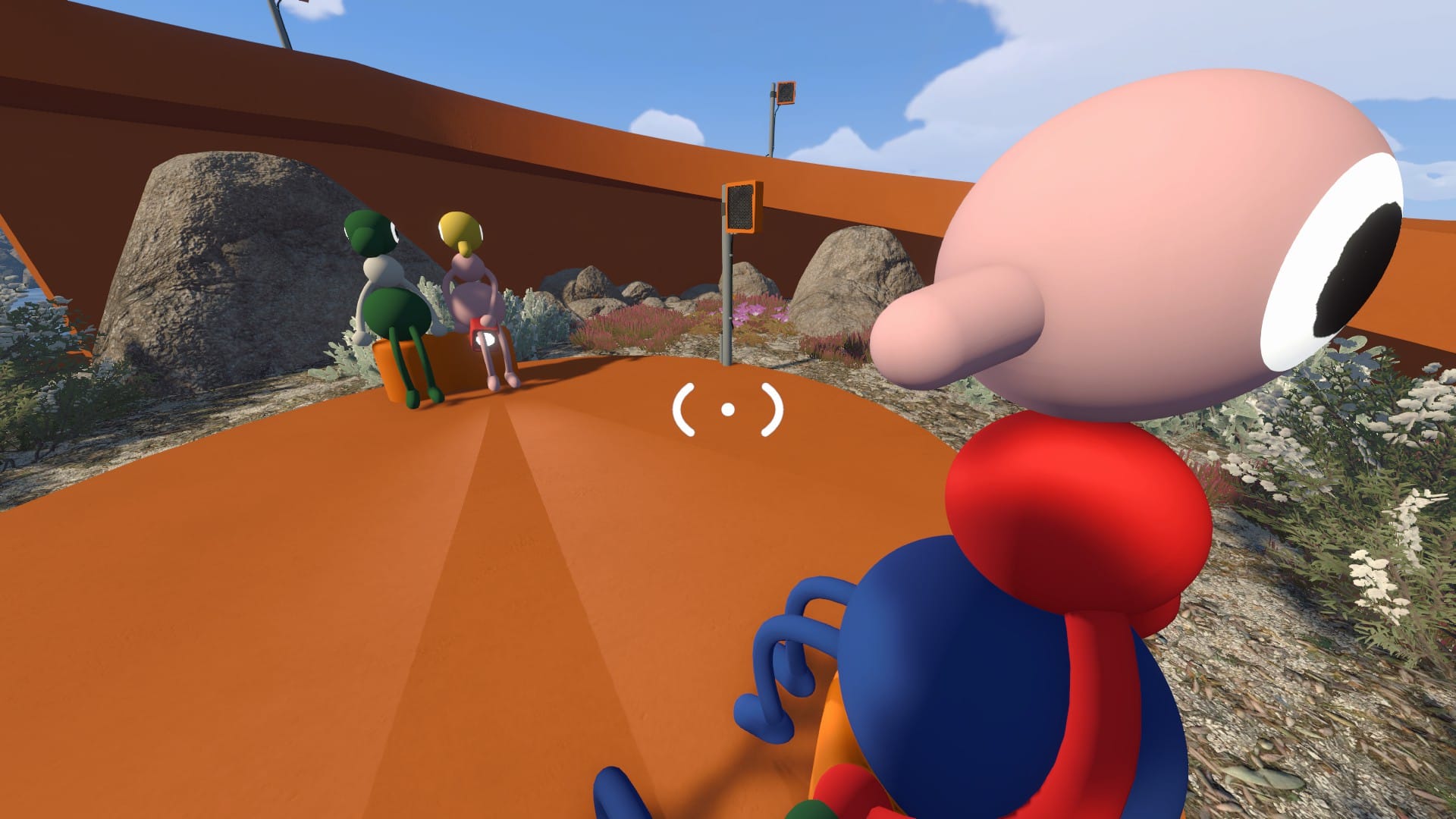
- House House and Panic's Big Walk just launched and has already sold over a million copies. I've played a bit with some friends, and we're having a great time trying to work together and solve puzzles. Important tip: You need to use the in-game chat system, don't link up on Discord or it'll spoil a lot of the fun.
- Remedy Entertainment's Alan Wake 2 has sold over three million copies since it launched in 2023. Control Resonant, the studio's next game, has over 1.5 million wishlists ahead of its September launch.
- Take-Two Interactive CEO Strauss Zelnick says more people preording Grand Theft Auto 6 are buying the $100 Ultimate Edition than the regular $80 version of the game.
- The Games Industry Hardship Fund, presented by Necrosoft Games, has raised over $200,000 for gaming workers that have been laid off. The bundle features dozens upon dozens of games, and is still available on itch.io for a couple more days.